A serious incident of violence has shocked the small Mallorcan town of Lloseta, where a 12-year-old boy was hospitalized after being savagely beaten by the father of another child during an informal football game.nThe events took place last Tuesday afternoon at the municipal sports field of Es Puig during a casual match between children. Moroccan Immigrant Arrested After Attacking Several Neighbors with an Axe in Granada Attack Triggered by Accidental Play According to sources from the Guardia Civil, the assault began when the victim accidentally struck another young player from the opposing team during normal play. At that moment, the father of the other child — a 47-year-old Moroccan man — allegedly stormed onto the pitch and violently attacked the 12-year-old, repeatedly striking him in the head.nAs a result of the beating, the boy suffered a concussion and was rushed to the hospital in Inca, where he remains recovering. Arrest and Judicial Measures Local residents who witnessed the attack immediately alerted the Lloseta Local Police and the Guardia Civil. Officers arrived quickly and arrested the alleged aggressor on the spot.nThe suspect was later brought before a judge, who ordered his release with a restraining order prohibiting him from approaching or contacting the victim or his family. Outrage in the Community The incident has caused widespread indignation in Lloseta. Neighbors and local authorities have strongly condemned the violent attack, especially since it involved a minor. In an official statement, the Town Council expressed its firm rejection of the incident, emphasizing that the match was not an official event organized by the local football club. 🇪🇸🇲🇦 Detenido un padre MARROQUÍ de 47 años por pegar una paliza a un niño de 12 años en un partido de fútbol en Camp Municipal Es Puig, Lloseta, Mallorca.El marroquí saltó al campo después de que le diera un golpe involuntario a su hijo en un lance del juego. Sin que mediara… pic.twitter.com/2hZStkXOf0— 🇪🇦PATRIAM TV🇪🇦 (@patriam_tv) April 10, 2026 The municipality declared: “This type of behavior has no place in our society.” The Town Council also extended its full support to the injured boy and his family, while stressing the importance of promoting sport as a space for respect, coexistence, and education, free from any form of violence.nLocal authorities have called on all adults to act responsibly, particularly in environments involving children, to prevent similar episodes from occurring in the future.
Blog
-
Moroccan Immigrant Arrested After Attacking Several Neighbors with an Axe in Granada
A violent incident has shaken the peaceful municipality of Montefrío in the province of Granada, where a man has been arrested after allegedly attacking several local residents with an axe, leaving multiple people injured. Hundreds of Moroccans Queue Outside Spanish Consulate in Almería to Apply for Naturalization The Guardia Civil launched a large-scale operation to locate the suspect, who was eventually found and detained after an intensive search in the surrounding olive groves. Attack in Public with a Bladed Weapon The events unfolded when the alleged attacker suddenly appeared in a public area and began assaulting several people with an axe, causing moments of extreme panic among residents and bystanders.nEmergency services attended to the victims, who suffered injuries of varying severity. Official details regarding the exact condition of the wounded have not yet been released. The attack has been described as an episode of extreme violence in a typically quiet rural setting, significantly heightening concern among local inhabitants. Police Operation and Arrest Following the incident, the Guardia Civil immediately activated a major search operation involving both ground patrols and aerial support. The suspect was finally located and arrested in the vicinity of Montefrío, bringing an end to a situation that had caused considerable alarm in the community. 🇪🇸 Manifestación de los vecinos de Montefrío (Granada) ante el BRUTAL ataque de un inmigrante magrebí con un hacha a dos mujeres y un hombre. pic.twitter.com/wQmUTuiIlX— Actualidad Noticias (@Actualidad_Pol) April 6, 2026 Growing Concern Among Residents Local residents have expressed increasing worry about safety in the area. Several neighbors stated that there had been previous incidents in recent times that had already contributed to a growing sense of insecurity in Montefrío. The event has once again sparked debate about security in rural areas of Spain and the need to strengthen police presence in certain municipalities. Investigation Underway Authorities have opened a formal investigation to clarify the exact circumstances of the attack and to determine the criminal responsibility of the detained individual. Migrant gangs violently attack innocent people in Spain The case remains under the responsibility of the Guardia Civil, which continues working to reconstruct the sequence of events and gather all relevant evidence.
-
Hundreds of Moroccans Queue Outside Spanish Consulate in Almería to Apply for Naturalization
Hundreds of Moroccans Queue Outside Spanish Consulate in Almería to Apply for Naturalization After Sánchez Government’s Mass Regularization A video circulating on social media shows long queues of Moroccan nationals lining up in front of the Spanish Consulate in Almería, southeastern Spain, as they seek to obtain the necessary documentation to legalize their situation or begin the naturalization process.nThe scenes come just days after the Spanish government, led by Prime Minister Pedro Sánchez, officially launched an extraordinary mass regularization program for irregular migrants. The process began on April 16 with online applications and continues with in-person appointments. Spain Launches Extraordinary Migrant Regularization Process This Thursday According to the Ministry of Inclusion, the measure aims to regularize hundreds of thousands of foreigners who have been living and working in Spain for months or years without legal status. The program is open to certain asylum seekers and economic migrants who can prove they arrived before specific cutoff dates in 2025. While the government presents the initiative as a necessary response to labor shortages and demographic challenges, critics have strongly condemned it, accusing Sánchez’s administration of encouraging irregular migration and prioritizing political interests over border control and national security. 🚨🇪🇸🇲🇦 | PAÍS TERMINADO: Un video muestra a cientos de marroquíes haciendo fila frente al consulado en Almería, España, buscando la documentación necesaria para nacionalizarse tras la regularización masiva decretada por el corrupto Pedro Sánchez. pic.twitter.com/rXGFrTFv5g— La Derecha Diario (@laderechadiario) April 13, 2026 In Almería — a province with a large agricultural sector that relies heavily on migrant labor — the consulate has seen a significant influx of applicants, many of them Moroccan. Similar scenes have been reported at other Spanish consulates in Morocco and at immigration offices across Spain. The government has insisted the process includes strict requirements, such as having no criminal record and not posing a threat to public order. However, opposition parties and several regional governments have voiced concerns about the speed of the procedure and its potential impact on public services and social cohesion. This latest development has reignited the intense political debate in Spain over immigration policy, with the Sánchez government once again at the center of controversy.
-
Spain Launches Extraordinary Migrant Regularization Process This Thursday
MADRID – The Spanish government will begin the extraordinary regularization process for irregular migrants this Thursday, April 16, with online applications opening first, followed by in-person appointments starting on April 20. The announcement was made by the Minister of Inclusion, Social Security and Migration, Elma Saiz, who also issued a clear message to Ukrainians currently in Spain under temporary protection: “Do not apply for this extraordinary regularization process.” In a statement posted on social media, the ministry emphasized that “this process is not designed for all foreigners.” It specifically clarified that those who arrived in Spain as displaced persons due to the war in Ukraine and hold a temporary protection residence permit should not apply. Appointments for in-person procedures at immigration offices will also become available starting this Thursday. The Council of Ministers is expected to formally approve the measure on Tuesday. It will be published in the Official State Gazette (BOE) on Wednesday, April 15, and will remain open for two and a half months, closing on June 30. Minister Saiz assured citizens in an interview with Cadena SER that there will be enough time to process all applications. “Whatever comes, we will handle it,” she said. illegal migrant from Honduras attempted to burn down a pub with people inside in Leon President Sánchez’s Message In a letter addressed to the Spanish people, Prime Minister Pedro Sánchez expressed pride in the initiative, describing it as “an act of normalization” that recognizes nearly half a million people who are already part of Spanish daily life. He framed the measure as both “an act of justice” toward Spain’s own history of emigration and “a necessity” due to the country’s aging population. “Without new people working and contributing, our prosperity slows down, our capacity to innovate weakens, and our public services — healthcare, pensions, and education — suffer,” Sánchez wrote. He added that neither technology nor automation alone can solve this demographic challenge in the coming years.nThe Prime Minister stressed that the true purpose of the regularization is “to recognize rights, but also to demand obligations.” Esto no es Marsella, 🇫🇷 ni Londres, 🇬🇧 ni Bruselas .🇧🇪 Es Andalucía y los recién llegados que están imponiendo su “ Cultura “.🤨🇪🇸 pic.twitter.com/VVItp88MJr— Víctor Sanchez Fortun (@Motard8559) April 13, 2026 Who Can Apply? The measure targets two main groups: • Asylum seekers: All individuals who applied for international protection before December 31, 2025, whether their application was approved or rejected.n• Economic migrants: Those who can prove they have been living in Spain since at least July 31, 2025 (a minimum of five months before December 31, 2025). The processing time is expected to take a maximum of three months. However, once an application is formally admitted (a step expected to take no more than 15 days), applicants will be allowed to start working immediately. Successful applicants will receive a one-year residence and work permit, valid across the entire Spanish territory and for any sector. After the initial year, they can transition into ordinary residency and work permits under immigration regulations. The process also allows for the simultaneous regularization of minor children living in Spain, who will receive a five-year authorization.nApplicants must have no criminal record and must not pose a threat to public order. Historical Context Spain has carried out six extraordinary regularizations in its recent history: two under the People’s Party (PP) in 2000 and 2001, and four under the Socialist Party (PSOE) in 1986, 1991, 1996, and 2005. Across the European Union, more than 40 such processes have taken place since the 1990s, with the most recent ones in Italy and Portugal in 2020 and 2021. Spain’s plan to regularize approximately 500,000 undocumented migrants, driven by the government as a moral and economic necessity, has sparked sharp criticism from opposition parties (PP and Vox) who warn of attracting more, overwhelming public services, and undermining the rule of law. Critics argue it rewards illegal entry, with some [Vox] calling it an “institutionalization of the migratory invasion”. Core Criticisms of the Regularization: • “Pull Effect” Concern: The far-right Vox party and some opposition members argue that this move will encourage more illegal immigration, creating a “pull” effect.n• Administrative Strain: Critics fear that legalizing so many people at once will cause a “collapse” of public services such as healthcare and housing.n• Legal/Procedural Complaints: The use of a quick decree rather than full parliamentary debate for this “extraordinary regularization” has been condemned, and a challenge was brought before the Supreme Court.n• Security Concerns: Despite assurances that criminal records render applicants ineligible, skeptics suggest that monitoring capabilities are insufficient for those with existing police records.n• Political Distraction: Opposition figures accuse Prime Minister Pedro Sánchez of using the measure to maintain power and distract from other pressing issues. The government insists on a “regularized and orderly” process to manage the existing realities of migrants already residing in the country. The debate highlights a deep, long-standing divide in Spanish politics regarding immigration management.
-
Spanish Judge Proposes Trial for Begoña Gómez, Wife of Prime Minister Pedro Sánchez, on Four Corruption Charges
MADRID – Judge Juan Carlos Peinado has concluded the investigation into Begoña Gómez, the wife of Spanish Prime Minister Pedro Sánchez, and has proposed putting her on trial for four separate criminal offences: influence peddling, corruption in business, embezzlement of public funds, and misappropriation. In the same ruling, the judge also proposes trying Gómez’s former Moncloa advisor, Cristina Álvarez, for the same four offences, and businessman Juan Carlos Barrabés for influence peddling and corruption in business. Israel Reprimands Spain Over Explosion of Giant Netanyahu Effigy The judge has ruled out the charge of professional intrusion (intrusismo profesional), stating there were only “weak and isolated indications” rather than solid evidence. The decision comes exactly two years after the case was opened. Judge Peinado has now given all parties five days to submit their provisional conclusions regarding the opening of an oral trial, which would be heard before a popular jury. Begoña Gómez is currently accompanying Prime Minister Sánchez on an official trip to China. Key Allegations Influence Peddling The judge finds sufficient evidence to charge Gómez with using her position as the Prime Minister’s wife to secure a university chair (cátedra) at the Complutense University of Madrid. In a strongly worded section of the ruling, Peinado states that he cannot find any similar case in Spanish democracy, describing the alleged conduct as more typical of “absolutist regimes” long forgotten in Spain. He suggests the case may require a broad, teleological interpretation of Articles 428 and 429 of the Criminal Code. The judge highlights several indicators, including a meeting at the Moncloa presidential complex between Gómez and the rector of the Complutense, Joaquín Goyache, who reportedly said he barely knew her except through the media and knew her mainly as “the wife of the President.” The rapid approval and creation of the chair, which allegedly served Gómez’s private professional development and provided her with remuneration, is also cited as evidence. Corruption in Business Peinado alleges that Gómez acted as the driving force behind attracting private funds, not genuinely for the public university chair, but allegedly for personal benefit. In exchange, companies allegedly received competitive advantages in public tenders linked to the influence of her husband as Prime Minister. Embezzlement of Public Funds The judge proposes trying both Gómez and Cristina Álvarez for embezzlement. He claims Gómez induced and benefited from Álvarez — a public employee paid by the Prime Minister’s Office — working as her personal assistant on tasks unrelated to her official duties. Misappropriation Gómez is also accused of misappropriating software developed within the university chair on “Competitive Social Transformation,” which she allegedly registered as her own property.nInvolvement of Juan Carlos Barrabés The judge considers that Barrabés’ role went far beyond simply teaching two classes in the master’s program co-directed by Gómez. Evidence includes meetings at Moncloa Palace, strategic advice on the master’s content, and the timing of his support letters coinciding with public tenders involving companies linked to him. Corruption scandals have Prime Minister Pedro Sánchez cornered Strong Judicial Language In a notable passage, Judge Peinado invokes the Latin proverb “Corruptio optimi pessima” (“The corruption of the best is the worst”), suggesting that corruption involving those closest to the highest levels of power is particularly serious. The case remains highly controversial and politically charged, coming at a sensitive time for the Sánchez government.
-
Israel Reprimands Spain Over Explosion of Giant Netanyahu Effigy
MADRID – Israel has formally reprimanded Spain’s most senior diplomat in Tel Aviv after a giant effigy of Israeli Prime Minister Benjamin Netanyahu was blown up during a traditional ceremony in a southern Spanish town. The seven-meter (23-foot) effigy, stuffed with 14 kilograms (31 lb) of gunpowder, was detonated on April 5 in El Burgo, a small town near Málaga, as part of a decades-old local custom. The mayor of El Burgo, Maria Dolores Narváez, confirmed the details to local television. In a strongly worded statement posted on X, Israel’s Foreign Ministry condemned the act as “appalling antisemitic hatred” and directly linked it to what it called “systemic incitement” by Spanish Prime Minister Pedro Sánchez’s government. “The appalling antisemitic hatred on display here is a direct result of Spanish Prime Minister Pedro Sánchez’s government’s systemic incitement,” the statement read, accompanied by a video clip of the explosion. Spain swiftly rejected the accusation. A source from the Spanish Foreign Ministry stated: “The Spanish government is committed to fighting against antisemitism and any form of hate or discrimination. As such, we totally reject any insidious allegation which suggests the contrary.” Context of the Tradition The mayor explained that the town has previously burned effigies of other world leaders during the same annual event, including former US President Donald Trump and Russian President Vladimir Putin. Ongoing Diplomatic Tensions The incident comes amid a prolonged diplomatic rift between Spain and Israel that began with the Gaza war and has since intensified. Spain has been one of the most vocal critics in Europe of Israel’s military actions in Gaza, Lebanon, and Iran. Spain recently banned aircraft and ships carrying weapons to Israel from using its ports or airspace. Israeli Foreign Minister Gideon Sa’ar described the move as “antisemitic.” In response, Spanish Foreign Minister José Manuel Albares accused Israel of violating international law and undermining a recent two-week ceasefire following heavy airstrikes on Lebanon. Prime Minister Pedro Sánchez, who has emerged as a leading European opponent of the conflict with Iran, has also closed Spanish airspace to any aircraft involved in what he called “reckless and illegal” military actions. This latest controversy has further strained relations between the two countries, highlighting deep divisions over the ongoing conflicts in the Middle East. 🚨🇪🇸🇮🇱 SPAIN is now violently exploding effigies of Israel’s Benjamin Netanyahu pic.twitter.com/5FQws8vKdM— Jackson Hinkle 🇺🇸 (@jacksonhinklle) April 11, 2026
-
Corruption scandals have Prime Minister Pedro Sánchez cornered
As of early 2026, Spanish Prime Minister Pedro Sánchez faces intense pressure from a series of corruption scandals involving the Socialist Party (PSOE) and his former allies, notably the “Caso Koldo,” which involves illegal payments and fraud in pandemic mask procurement. The scandals have led to the detention of various officials, prompting apologies from Sánchez and promises of party restructuring. Key Corruption Scandals & Allegations: • Caso Koldo/Ábalos: A major investigation involving bribery, corruption, and money laundering linked to Jose Luis Ábalos, a former minister and key ally, and his aide Koldo García. • Involvement of Associates: Investigations cover several individuals close to the PSOE leadership, including dealings with public contracts. • Party Misconduct: Allegations include illegal payments within the party and kickbacks, causing significant political strain. • Allegations against Begoña Gómez: The Prime Minister’s wife has also been subject to investigations arising from allegations by opposition-linked organizations. Sánchez’s Response: • Sánchez has apologized to the Spanish public, stating he had no knowledge of the misconduct and demanding “zero tolerance”. • He initiated an internal audit of the PSOE and fired key figures involved, including Ábalos. • He has accused the opposition of conducting a smear campaign, insisting on finishing his term until 2027. nPolitical Impact: • The opposition has demanded his resignation, citing this as a systemic issue within his government. • The scandals have prompted debates ab
-
Vandalism Strikes the Temple of Debod, Madrid’s Unique 2,000-Year-Old Monument
The Temple of Debod, one of the most unique historical sites in Madrid and a living testament to more than 2,000 years of history, is now showing visible signs of deterioration caused by acts of vandalism.nVisitors can currently see inscriptions, scratches, and graffiti carved into the stones of its ancient portals — clear evidence of uncivil behavior by some who visit the monument. Located in the Parque del Oeste, very close to Plaza de España, the Temple of Debod has become one of the most photographed landmarks in the Spanish capital. This authentic Egyptian temple, which was dismantled stone by stone and relocated from Nubia, faces the typical conservation challenges of any open-air monument: weather exposure, pollution, and constant foot traffic from tourists. Unlike other temples of its kind, the Temple of Debod is fully integrated into a public park, which makes it easily accessible but also more vulnerable to wear and tear. In 2022, Madrid’s Deputy Mayor for Culture, Tourism and Sports, Marta Rivera de la Cruz, ruled out the possibility of covering or enclosing the monument. She stated at the time that a technical study had found the temple to be in “reasonable condition” and that covering it was “not even being considered.”n“The stone of Debod undergoes periodic examinations so we can act if necessary,” she explained. “But for the City Council, the option of covering the temple is not on the table.” 11-Year-Old Boy Dies After Being Stabbed in Villanueva de la Cañada In addition to natural factors such as climate, pollution, and heavy visitor traffic, the monument is now suffering from deliberate damage. Graffiti featuring symbols, names, and initials — completely unrelated to its Egyptian origin — can be seen on several surfaces. The absence of the traditional water basin (which normally acts as a physical barrier) has left the temple even more exposed. During Holy Week, several witnesses reported attempts by tourists to enter the restricted areas without tickets, taking advantage of the empty basin. Security staff had to intervene, using whistles to force unauthorized visitors to step back. Rivera de la Cruz stated at the end of 2025 that the Madrid City Council intends to “recover” the water feature surrounding the temple “as soon as possible.” The basin has suffered repeated leaks, which led to it being drained. A new project to restore the water is currently under consideration. It is worth remembering that the Temple of Debod houses a free municipal museum. Visitors can request free tickets online to access the interior and learn about its rich history, as well as walk around the exterior and its characteristic Ptolemaic gateways. Unfortunately, it is precisely on these ancient arches and interior walls that most of the vandalism is concentrated. Historical Background The Temple of Debod dates back to between 195 and 185 BC, when the Meroitic king Adijalamani ordered the construction of a small chapel dedicated to Amun of Debod and Isis in Lower Nubia (present-day Sudan). It was later expanded by the Ptolemaic pharaohs, who added sanctuaries, vestibules, crypts, and an upper terrace for rituals dedicated to Osiris. During the Roman period, emperors such as Augustus and Tiberius added further decorations with reliefs depicting offerings to the gods.nThe temple survived centuries of history until it faced its greatest threat in the 20th century. The construction of the Aswan High Dam in the 1960s put numerous Nubian temples at risk of being submerged. Thanks to an international UNESCO campaign to save them, and in gratitude for Spain’s help — particularly in the rescue of Abu Simbel — Egypt donated the Temple of Debod to Spain in 1968.
-

illegal migrant from Honduras attempted to burn down a pub with people inside in Leon
On the night of Holy Thursday (2 April 2026), in the small municipality of San Emiliano (León province, Spain), a 26-year-old man from Honduras was arrested after allegedly trying to set fire to the entrance of a pub while people were inside. According to multiple Spanish local news reports:
The events began with a heated argument inside the establishment.
After being involved in a fight (or being asked to leave), the man left and returned with a jerrycan of gasoline (gasóleo).
He poured the fuel at the entrance of the pub and set it on fire.
Witnesses reported him shouting threats such as “Os voy a quemar vivos, hijos de puta” (“I’m going to burn you alive, you sons of bitches”).
The fire spread quickly but was rapidly extinguished by people inside using a fire extinguisher. No one was injured, though the situation caused significant panic and tension.
A second individual (reportedly his companion) allegedly threatened customers with an iron bar.
The Honduran man was detained by the Guardia Civil and faces charges including arson with danger to people and property damage. Some reports also mention a second person involved who may face extradition proceedings.
San Emiliano is a small, quiet rural town in the Babia region of León. Incidents of this severity are extremely rare there. The story has circulated widely on social media, often framed in the broader European debate on illegal immigration and public safety, with the suspect described as an “illegal migrant.”
Local Spanish outlets (such as La Nueva Crónica, Heraldo de León, Digital de León, and Tribuna de León) confirm the key facts: the nationality, the use of gasoline, the attempt to burn the entrance of the pub with people present, and the arrest.
-
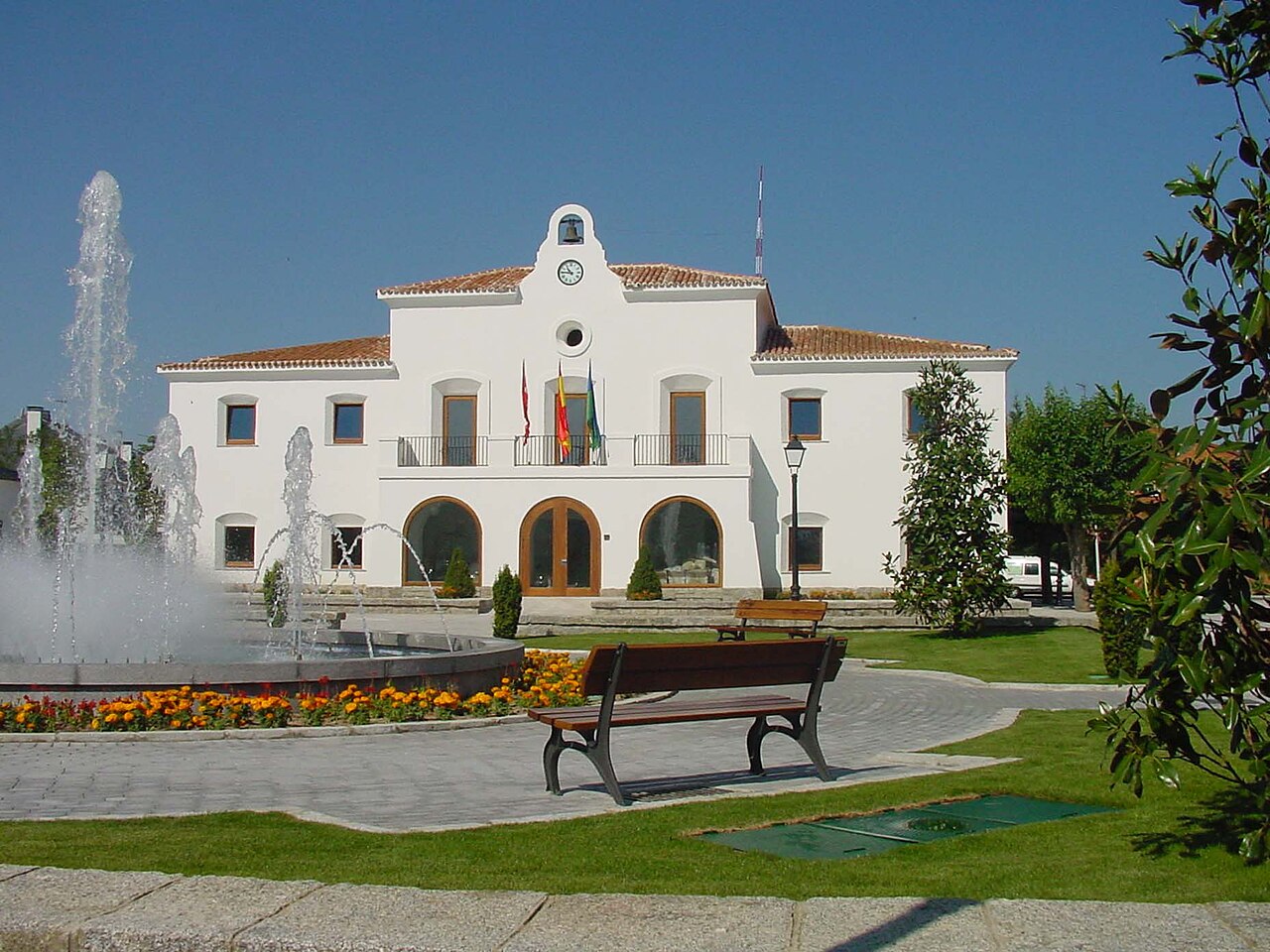
11-Year-Old Boy Dies After Being Stabbed in Villanueva de la Cañada
The emergency services (112) initially reported that the child was in critical condition. Later, the local town hall confirmed his death. When SUMMA 112 emergency teams arrived at the scene, the boy was in cardiorespiratory arrest due to multiple stab wounds to the chest, neck, and back. Medical personnel managed to revive him, stabilized his condition, and airlifted him by helicopter to the Hospital 12 de Octubre in Madrid with a critical prognosis. Unfortunately, he succumbed to his injuries.
The alleged perpetrator, a 23-year-old man, was arrested shortly afterward by the Guardia Civil. The investigation remains open, with agents from the judicial police and citizen security units continuing to work on the case.
The incident has caused deep shock in the small Madrid town and across the region.
Migrant gangs violently attack innocent people in Spain
Key Facts Summary:
• Victim: 11-year-old boy (reportedly of Romanian origin, named David in some reports) • Location: La Despernada cultural center, Villanueva de la Cañada (Madrid) • Date: Thursday (reported as 9 or 10 April 2026, depending on the exact timing) • Suspect: 23-year-old man (reportedly of Peruvian origin, with mentions of autism spectrum disorder in several Spanish media outlets) • Weapon: White weapon (knife or similar sharp object) • Current status: Suspect detained; investigation ongoing
This is a tragic and shocking incident, especially given the young age of the victim and the public setting (a cultural center where the boy was attending an English class).