MADRID – Israel has formally reprimanded Spain’s most senior diplomat in Tel Aviv after a giant effigy of Israeli Prime Minister Benjamin Netanyahu was blown up during a traditional ceremony in a southern Spanish town. The seven-meter (23-foot) effigy, stuffed with 14 kilograms (31 lb) of gunpowder, was detonated on April 5 in El Burgo, a small town near Málaga, as part of a decades-old local custom. The mayor of El Burgo, Maria Dolores Narváez, confirmed the details to local television. In a strongly worded statement posted on X, Israel’s Foreign Ministry condemned the act as “appalling antisemitic hatred” and directly linked it to what it called “systemic incitement” by Spanish Prime Minister Pedro Sánchez’s government. “The appalling antisemitic hatred on display here is a direct result of Spanish Prime Minister Pedro Sánchez’s government’s systemic incitement,” the statement read, accompanied by a video clip of the explosion. Spain swiftly rejected the accusation. A source from the Spanish Foreign Ministry stated: “The Spanish government is committed to fighting against antisemitism and any form of hate or discrimination. As such, we totally reject any insidious allegation which suggests the contrary.” Context of the Tradition The mayor explained that the town has previously burned effigies of other world leaders during the same annual event, including former US President Donald Trump and Russian President Vladimir Putin. Ongoing Diplomatic Tensions The incident comes amid a prolonged diplomatic rift between Spain and Israel that began with the Gaza war and has since intensified. Spain has been one of the most vocal critics in Europe of Israel’s military actions in Gaza, Lebanon, and Iran. Spain recently banned aircraft and ships carrying weapons to Israel from using its ports or airspace. Israeli Foreign Minister Gideon Sa’ar described the move as “antisemitic.” In response, Spanish Foreign Minister José Manuel Albares accused Israel of violating international law and undermining a recent two-week ceasefire following heavy airstrikes on Lebanon. Prime Minister Pedro Sánchez, who has emerged as a leading European opponent of the conflict with Iran, has also closed Spanish airspace to any aircraft involved in what he called “reckless and illegal” military actions. This latest controversy has further strained relations between the two countries, highlighting deep divisions over the ongoing conflicts in the Middle East. 🚨🇪🇸🇮🇱 SPAIN is now violently exploding effigies of Israel’s Benjamin Netanyahu pic.twitter.com/5FQws8vKdM— Jackson Hinkle 🇺🇸 (@jacksonhinklle) April 11, 2026
Category: News
-
Vandalism Strikes the Temple of Debod, Madrid’s Unique 2,000-Year-Old Monument
The Temple of Debod, one of the most unique historical sites in Madrid and a living testament to more than 2,000 years of history, is now showing visible signs of deterioration caused by acts of vandalism.nVisitors can currently see inscriptions, scratches, and graffiti carved into the stones of its ancient portals — clear evidence of uncivil behavior by some who visit the monument. Located in the Parque del Oeste, very close to Plaza de España, the Temple of Debod has become one of the most photographed landmarks in the Spanish capital. This authentic Egyptian temple, which was dismantled stone by stone and relocated from Nubia, faces the typical conservation challenges of any open-air monument: weather exposure, pollution, and constant foot traffic from tourists. Unlike other temples of its kind, the Temple of Debod is fully integrated into a public park, which makes it easily accessible but also more vulnerable to wear and tear. In 2022, Madrid’s Deputy Mayor for Culture, Tourism and Sports, Marta Rivera de la Cruz, ruled out the possibility of covering or enclosing the monument. She stated at the time that a technical study had found the temple to be in “reasonable condition” and that covering it was “not even being considered.”n“The stone of Debod undergoes periodic examinations so we can act if necessary,” she explained. “But for the City Council, the option of covering the temple is not on the table.” 11-Year-Old Boy Dies After Being Stabbed in Villanueva de la Cañada In addition to natural factors such as climate, pollution, and heavy visitor traffic, the monument is now suffering from deliberate damage. Graffiti featuring symbols, names, and initials — completely unrelated to its Egyptian origin — can be seen on several surfaces. The absence of the traditional water basin (which normally acts as a physical barrier) has left the temple even more exposed. During Holy Week, several witnesses reported attempts by tourists to enter the restricted areas without tickets, taking advantage of the empty basin. Security staff had to intervene, using whistles to force unauthorized visitors to step back. Rivera de la Cruz stated at the end of 2025 that the Madrid City Council intends to “recover” the water feature surrounding the temple “as soon as possible.” The basin has suffered repeated leaks, which led to it being drained. A new project to restore the water is currently under consideration. It is worth remembering that the Temple of Debod houses a free municipal museum. Visitors can request free tickets online to access the interior and learn about its rich history, as well as walk around the exterior and its characteristic Ptolemaic gateways. Unfortunately, it is precisely on these ancient arches and interior walls that most of the vandalism is concentrated. Historical Background The Temple of Debod dates back to between 195 and 185 BC, when the Meroitic king Adijalamani ordered the construction of a small chapel dedicated to Amun of Debod and Isis in Lower Nubia (present-day Sudan). It was later expanded by the Ptolemaic pharaohs, who added sanctuaries, vestibules, crypts, and an upper terrace for rituals dedicated to Osiris. During the Roman period, emperors such as Augustus and Tiberius added further decorations with reliefs depicting offerings to the gods.nThe temple survived centuries of history until it faced its greatest threat in the 20th century. The construction of the Aswan High Dam in the 1960s put numerous Nubian temples at risk of being submerged. Thanks to an international UNESCO campaign to save them, and in gratitude for Spain’s help — particularly in the rescue of Abu Simbel — Egypt donated the Temple of Debod to Spain in 1968.
-

illegal migrant from Honduras attempted to burn down a pub with people inside in Leon
On the night of Holy Thursday (2 April 2026), in the small municipality of San Emiliano (León province, Spain), a 26-year-old man from Honduras was arrested after allegedly trying to set fire to the entrance of a pub while people were inside. According to multiple Spanish local news reports:
The events began with a heated argument inside the establishment.
After being involved in a fight (or being asked to leave), the man left and returned with a jerrycan of gasoline (gasóleo).
He poured the fuel at the entrance of the pub and set it on fire.
Witnesses reported him shouting threats such as “Os voy a quemar vivos, hijos de puta” (“I’m going to burn you alive, you sons of bitches”).
The fire spread quickly but was rapidly extinguished by people inside using a fire extinguisher. No one was injured, though the situation caused significant panic and tension.
A second individual (reportedly his companion) allegedly threatened customers with an iron bar.
The Honduran man was detained by the Guardia Civil and faces charges including arson with danger to people and property damage. Some reports also mention a second person involved who may face extradition proceedings.
San Emiliano is a small, quiet rural town in the Babia region of León. Incidents of this severity are extremely rare there. The story has circulated widely on social media, often framed in the broader European debate on illegal immigration and public safety, with the suspect described as an “illegal migrant.”
Local Spanish outlets (such as La Nueva Crónica, Heraldo de León, Digital de León, and Tribuna de León) confirm the key facts: the nationality, the use of gasoline, the attempt to burn the entrance of the pub with people present, and the arrest.
-
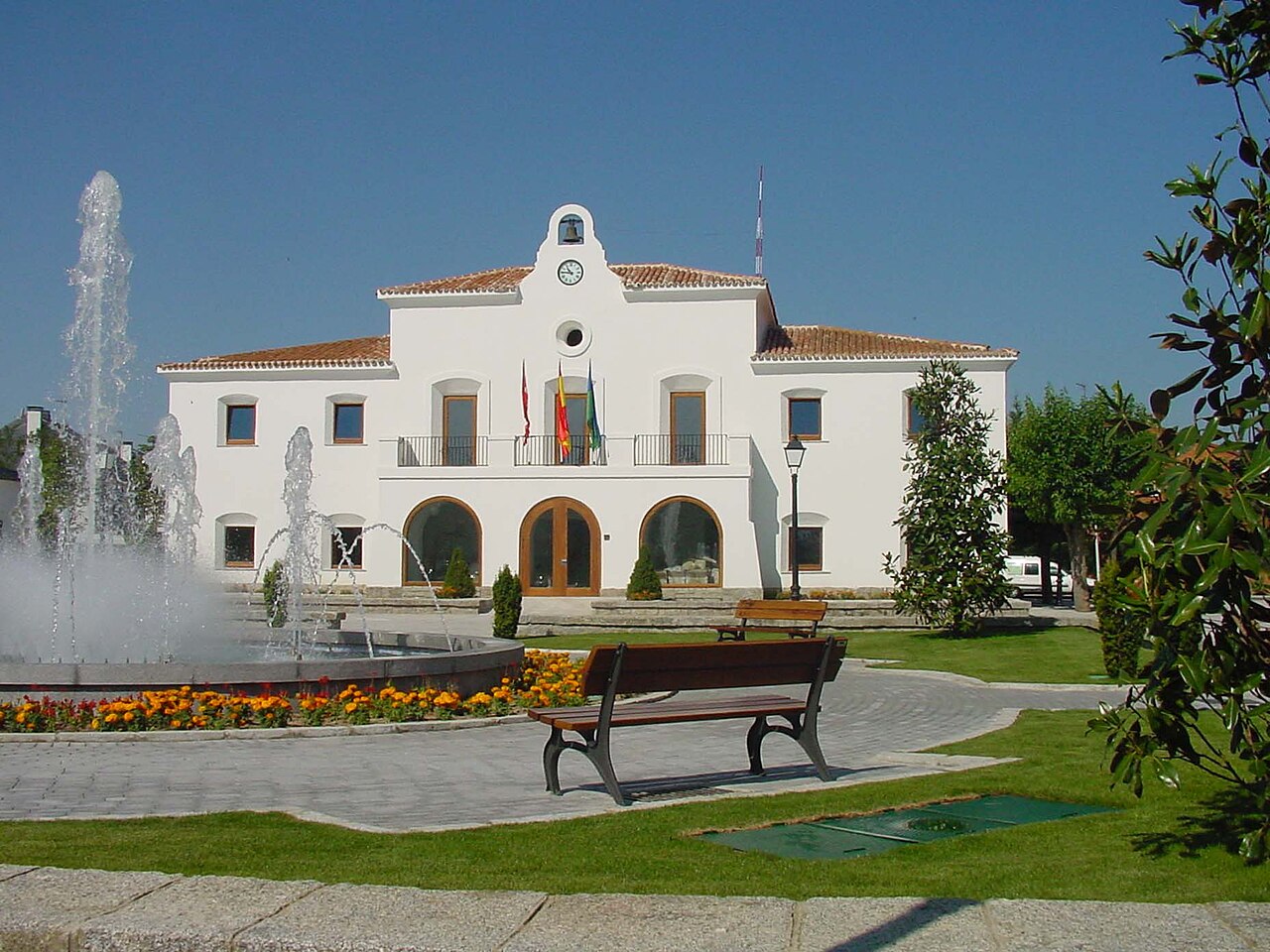
11-Year-Old Boy Dies After Being Stabbed in Villanueva de la Cañada
The emergency services (112) initially reported that the child was in critical condition. Later, the local town hall confirmed his death. When SUMMA 112 emergency teams arrived at the scene, the boy was in cardiorespiratory arrest due to multiple stab wounds to the chest, neck, and back. Medical personnel managed to revive him, stabilized his condition, and airlifted him by helicopter to the Hospital 12 de Octubre in Madrid with a critical prognosis. Unfortunately, he succumbed to his injuries.
The alleged perpetrator, a 23-year-old man, was arrested shortly afterward by the Guardia Civil. The investigation remains open, with agents from the judicial police and citizen security units continuing to work on the case.
The incident has caused deep shock in the small Madrid town and across the region.
Migrant gangs violently attack innocent people in Spain
Key Facts Summary:
• Victim: 11-year-old boy (reportedly of Romanian origin, named David in some reports) • Location: La Despernada cultural center, Villanueva de la Cañada (Madrid) • Date: Thursday (reported as 9 or 10 April 2026, depending on the exact timing) • Suspect: 23-year-old man (reportedly of Peruvian origin, with mentions of autism spectrum disorder in several Spanish media outlets) • Weapon: White weapon (knife or similar sharp object) • Current status: Suspect detained; investigation ongoing
This is a tragic and shocking incident, especially given the young age of the victim and the public setting (a cultural center where the boy was attending an English class).
-
Migrant gangs violently attack innocent people in Spain
In July 2025, serious unrest occurred in the small town of Torre-Pacheco (Region of Murcia, southeastern Spain). The trigger was the brutal beating of a 68-year-old Spanish pensioner in the street. Three young men of North African (Maghrebi/Moroccan) origin were arrested in connection with the attack.
This sparked several nights of violent clashes: • Local residents mobilized, with some hunting for migrants and attacking people perceived as North African. • Migrants (some carrying Moroccan flags) responded with violence, using knives, sticks, and other objects. • Riot police intervened; there were thrown objects, burning containers, injuries (around 5–6 people hurt), and multiple arrests (roughly 8–14 people total, including both Spaniards and migrants).
It was described by mainstream outlets (Reuters, Telegraph, etc.) as one of the worst episodes of anti-migrant violence in Spain in recent decades, but it was largely contained to this one town and lasted a few days.
Isolated but real tensions: Spain has seen rising concerns over crime linked to certain migrant groups (especially North African street gangs in some areas, and Latin American gangs like Tren de Aragua in cities). Specific incidents of violence, theft, or harassment by individuals or small groups do occur and are widely reported on social media.
Official statistics show that while certain types of street crime (e.g., in tourist areas or poor neighborhoods) have increased in some cities, the national crime rate has “exploded.”
Context of migration: Spain has a large North African (especially Moroccan) migrant population, some working in agriculture and services and most of them receive government benefits.. Integration challenges, illegal entries via the Mediterranean, and gang activity exist.
Spain has also pursued large-scale regularization of undocumented migrants in 2026, which is controversial.